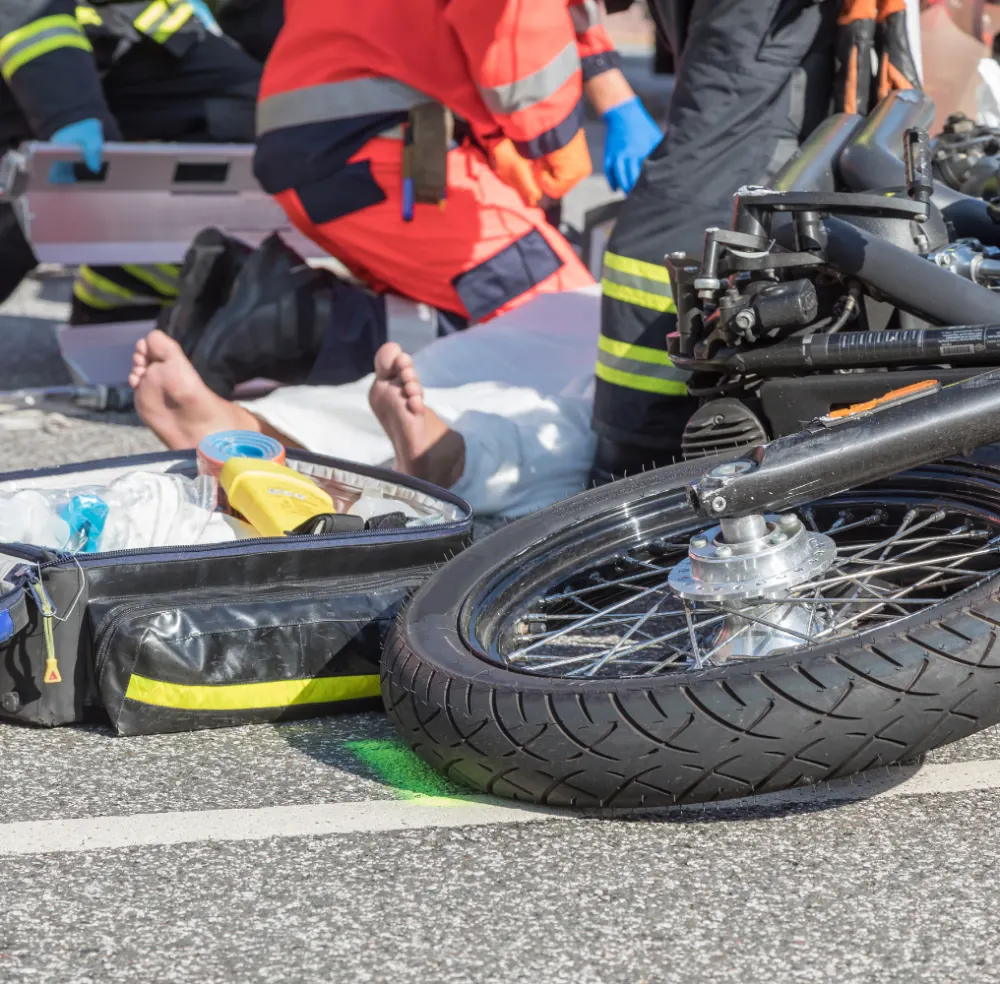










Motorcycle accident claims are governed by different legal rules than standard car accident cases in Florida. These distinctions can significantly affect how fault is evaluated, what damages are recoverable, and how insurance coverage applies.
Unlike most car accident cases, motorcycle accident victims in Florida are not required to prove a permanent injury before seeking compensation. This allows injured riders to pursue damages for pain and suffering even when a full physical recovery is expected.
Motorcyclists may also recover property damage for repairs or replacement of their motorcycle when another driver caused the crash. These claims frequently arise when drivers make unsafe left turns, fail to yield, or misjudge the presence of a motorcycle on the road.
Because these cases are treated differently, early decisions matter. Seeking medical care, documenting the crash, and avoiding premature insurance statements can all influence how a claim develops. Working with a Sarasota motorcycle accident attorney who understands Florida motorcycle accident law helps ensure these steps are handled correctly from the start.